
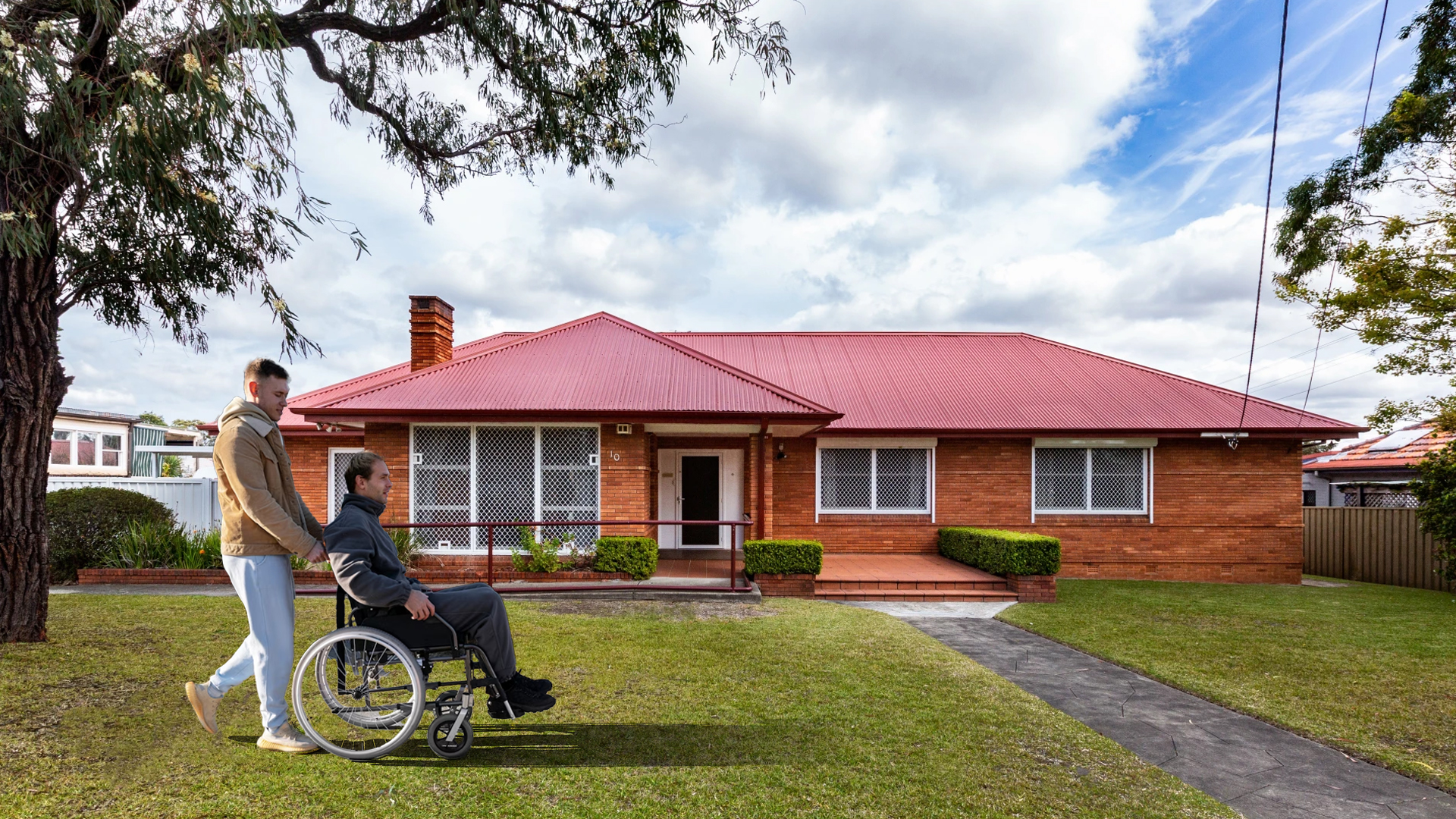
Welcome to “Your Handbook to NDIS Short-Term Accommodation” – your guide to navigating short term accommodation in Australia. This guide explores costs and options for care during brief breaks from your regular residence. Whether you prefer communal stays or private retreats, NDIS short term accommodation provides an opportunity to discover new experiences and accommodate situations when regular caregivers are unavailable. Let’s begin your journey here with insights and knowledge to help you get the most out of NDIS short term accommodation.
Understanding NDIS Short-Term Accommodation (STA)
STA, often referred to as NDIS Short Term Accommodation, provides assistance to individuals needing temporary living arrangements away from home.
The funding for NDIS Short Term Accommodation can be utilized, benefiting both the individual and their caregivers. This grants caregivers a brief reprieve from their caregiving responsibilities.
Occasionally, a brief stay away from home—within the context of NDIS Short Term Accommodation—can serve several purposes:
- Provides an opportunity to explore new experiences while availing NDIS Short Term Accommodation.
- Offers a chance to forge new friendships and acquire fresh skills, facilitated by NDIS Short Term Accommodation.
- Assists in upholding the individual’s current living situation by giving informal caregivers a well-deserved break through NDIS Short Term Accommodation.
- NDIS Short Term Accommodation might be suitable when the regular support network is unavailable for a short span.
The services covered by NDIS Short Term Accommodation comprise:
- Personal care as part of NDIS Short Term Accommodation services.
- Lodging, a crucial aspect of NDIS Short Term Accommodation.
- Meals, ensuring proper nourishment during the NDIS Short Term Accommodation period.
- Agreed-upon activities with the service provider for a fulfilling NDIS Short Term Accommodation experience.
Typically, funding for NDIS Short Term Accommodation extends up to 28 days annually. The funding can be utilized flexibly, such as in a continuous 14-day block or for one weekend per month, all within the framework of NDIS Short Term Accommodation.

How NDIS make decisions about Short Term Accommodation?
When considering NDIS short term accommodation, one needs to understand the following points:
- The necessity for NDIS short term accommodation arises from one’s disability.
- It aids in achieving personal goals.
- It facilitates community engagement.
- NDIS short term accommodation offers value in terms of cost-effectiveness.
- The extent of support provided by family and informal sources.
Funding for NDIS short term accommodation may be considered if:
- Family or informal support can extend assistance for an extended duration.
- Anticipated decrease in future support needs.
- It contributes to maintaining functional ability.
- It enhances independence.
- It enables participation in various activities.
Funding would not cover NDIS short term accommodation for:
- Situations where family or informal support can suffice for a longer duration.
- Cases where projected future support needs might decrease.
- Instances where the goal is to maintain functional ability.
- Scenarios where the aim is to increase independence.
- Activities that enable engagement in a broader range of activities.
Long-term accommodation costs are excluded from NDIS short term accommodation funding, as they fall under general living expenses. Similarly, accommodations for reasons unrelated to disability, like waiting for home modifications, are not covered.
It’s important to note that NDIS short term accommodation isn’t intended for vacations. Funding is provided only when the need for such accommodation is tied to disability-related aspects, such as skill development. For vacation-related needs in an alternate location, individuals should consult their Support Coordinator, Local Area Coordinator, Early Childhood Partner, or planner to arrange NDIS disability support services.
How to Apply for NDIS Short Term Accommodation?
For individuals aged 9 and above, several options exist to initiate the application:
- Local area coordinators or the nearby NDIS office are available to guide through the application process and serve as the main point of contact. The nearest location can be found by referring to the NDIS locator tool.
- Applying over the phone is also possible by dialing 1800 800 110.
For children under the age of 9, it is advised that families consult an early childhood partner prior to making an NDIS application. These partners can provide assistance to young children before the application, and offer insights into whether the NDIS is suitable for the child.
During the application process, the applicant or their authorized representative must:
- Provide necessary information and documents to verify their identity. More information about the evidence of identity and privacy can be obtained.
- Supply essential information and documents to determine eligibility.
- Sign or validate the NDIS application.
Assistance from others is permissible if the applicant desires. In some cases, they can even submit the application on behalf of the applicant.
Does NDIS Short Term Accommodation Help You Pursue Your Goals & Participate in The Community?
Short-term accommodation should help you achieve your goals, such as improving independence and building skills. This can also give carers a break. NDIS Short-Term Accommodation is designed to support you in pursuing your goals by providing temporary lodging when needed. It can enable you to participate in community activities, events, or programs that contribute to your personal growth and social engagement.
What about NDIS Short Term Accommodation for Children?
Funding for NDIS Short Term Accommodation for children depends on meeting NDIS criteria, considering the child’s needs and family situation.
The family’s overall context is evaluated, and discussions with parents and children explore additional funded support possibilities, including NDIS Short Term Accommodation.
It is possible that funding might be offered by them for Short Term Accommodation to children who necessitate additional support compared to their peers. For example, although parents might aid younger children with personal care, the same is not assumed for teenagers or adults without disabilities.
Funds can cover various aids beyond NDIS Short Term Accommodation, helping families to:
- Provide long-term care that complements NDIS Short Term Accommodation.
- Maintain family stability, alongside NDIS Short Term Accommodation.
Other aids encompass:
- Home assistance that supplements NDIS Short Term Accommodation.
- Training for behaviour plans or skill development, like sleep routines, in addition to NDIS Short Term Accommodation.
- Enabling community engagement, along with NDIS Short Term Accommodation.
- Managing behaviours or promoting positive strategies, while considering NDIS Short Term Accommodation.
For high-risk cases of external accommodation, funding beyond 28 days yearly could be granted, up to 30 days at a time or 60 days annually, in conjunction with NDIS Short Term Accommodation.
State child protection services can also offer assistance alongside your support, varying by location, in tandem with NDIS Short Term Accommodation.
Can you use NDIS Short Term Accommodation in a Crisis Situation?
The purpose of Short Term Accommodation isn’t to address the housing crisis. It’s specifically funded when it’s directly tied to an individual’s disability. In situations where a person is homeless or requires a place to live, they should get in touch with homeless services available in their state or territory. Emergencies can also arise, like if a person’s caregivers are suddenly unable to provide care, or if there’s a safety concern in their current residence. To determine the most suitable solution for meeting disability support needs, individuals can reach out to their support coordinator, local area coordinator, or planner for additional information.
Finding NDIS Short-Term Accommodation Providers

Across Australia, numerous NDIS-registered service providers offer valuable short-term accommodation services, such as Safelane Healthcare. To discover NDIS-registered short-term accommodation options nearby, individuals can visit the official NDIS website. By entering their Suburb or Postcode and selecting the desired service, they can find suitable providers. Alternatively, people can search for providers by name to access comprehensive information.
Best NDIS Short Term Accommodation Providers in Melbourne, VIC
Finding the right short term accommodation under the NDIS can make a big difference in day-to-day comfort and well-being. Located in Melbourne, SafeLane Healthcare offers short-term accommodation that aims to provide a supportive and welcoming environment for participants.
The team at SafeLane focuses on creating a homely atmosphere where individuals can feel comfortable and cared for. Support includes help with daily routines, nutritious meals, medication assistance, and other essential services tailored to individual needs.
If you or someone you care for is looking for short term accommodation options under the NDIS, feel free to reach out to learn more about how SafeLane can support your situation.
Wrap up
This guide explores NDIS Short Term Accommodation for individuals who require temporary support. It covers eligibility criteria, funding, and the benefits of such accommodation. NDIS Short Term Accommodation offers personal growth, skill development, and new relationships. It is not intended for vacations but provides caregivers a break and individuals with disabilities opportunities to engage and thrive. This guide empowers individuals and caregivers to make informed decisions and improve their quality of life.
Subscribe Our Newsletter
Join our newsletter for community updates and resources.